Hurricane-Rated Retractable Awnings in St. Augustine, FL
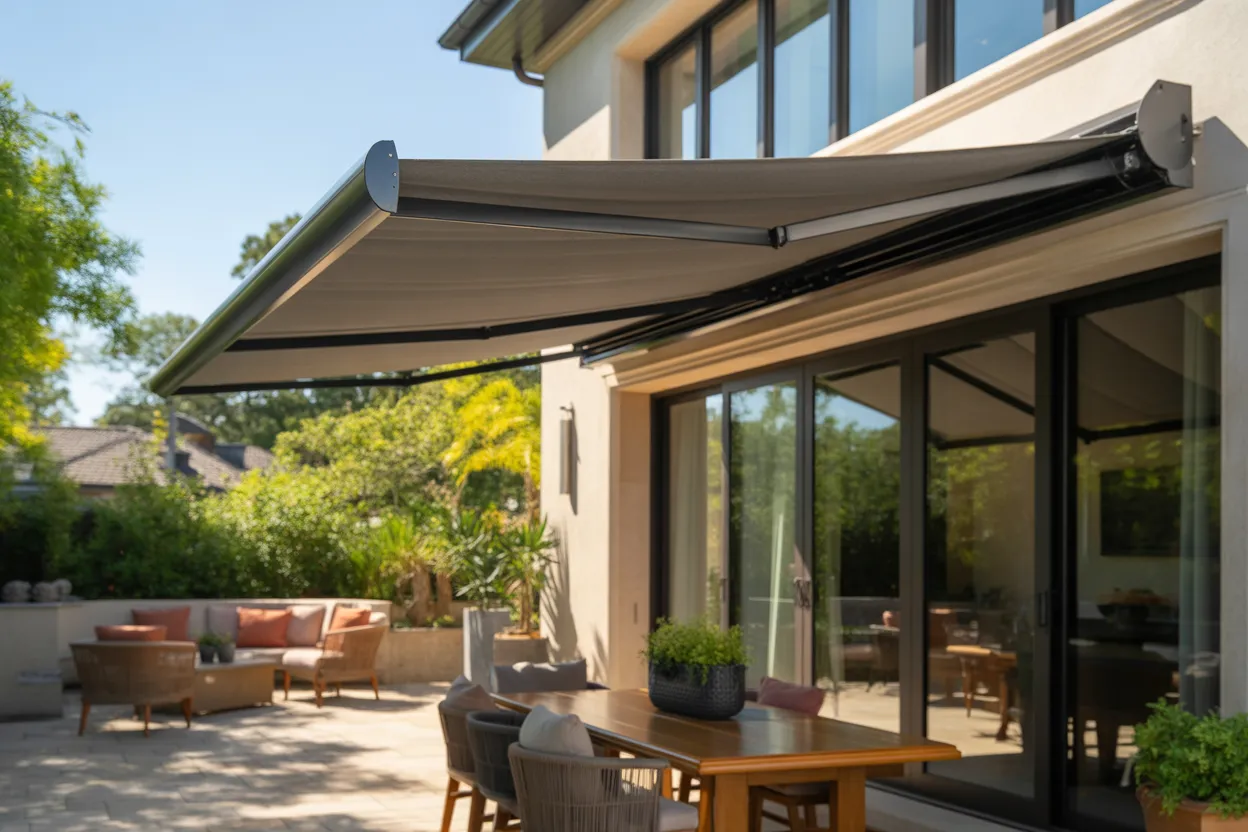
St. Augustine sits directly on the Atlantic — the same exposure that runs down to Anastasia State Park and around the barrier islands. That single fact changes which retractable awnings actually belong on a First Coast home. Standard residential systems handle everyday breeze and afternoon sun — they don't handle nor'easters or named-storm season. Hurricane-rated retractable awnings are a different class of product: heavier frames, stronger fabric, reinforced mounting, and automated retraction that takes the awning out of play before the storm hits.
What Makes an Awning Hurricane-Rated
Three things separate hurricane-rated systems from standard residential:
- Reinforced arms. Thicker-wall aluminum tubing, heavier pivot joints, stainless hardware rated for salt exposure.
- Heavier fabric. Hurricane fabric runs 12 to 15 oz per square yard versus 9 to 10 oz standard, with tighter weave and higher tear strength.
- Auto-retract wind sensors. The sensor triggers the motor to retract when gusts cross the set threshold — typically 30 to 40 mph on wind-rated systems. The awning is stowed in under 30 seconds, long before storm-force winds arrive.
Most hurricane-rated retractables in the network carry deployed wind ratings between 45 and 60 mph. Retracted and stowed, they stay secure up to 130 mph when mounted correctly.
Mounting Matters More Than the Awning
An awning is only as strong as what it's attached to. Contractors in the St. Augustine Awnings network inspect the mounting surface on every hurricane install — wood fascia thickness, concrete wall pullout strength, stucco over block versus stucco over wood frame, and coquina or historic masonry specifics common in the Old City. Where fascia is too thin or wood too soft, a steel mounting plate spreads the load. Every anchor is stainless or hot-dip galvanized.
Coastal Fabric Spec
Solution-dyed acrylic from Sunbrella and Dickson is the standard for hurricane-rated fabric. It holds color 10 or more years against First Coast UV and does not delaminate the way vinyl-coated products can after repeated storm cycling. On beachside installs from Vilano Beach through Crescent Beach and Ponte Vedra Beach, the contractor spec's the heaviest available weight.
Named-Storm Protocol
Hurricane-rated does not mean indestructible. When the National Hurricane Center names a system and St. Johns County issues warnings, every awning gets fully retracted and stowed. Some homeowners remove the fabric tube entirely for major storms; the contractor walks through the process on install day.
Hurricane-rated systems often qualify for insurance premium reductions under Florida's wind mitigation program. The contractor provides the product spec sheet and Florida Product Approval number for the claim, and pulls the permit for every coastal install.
What to Expect
Coastal installs run a full day versus a half day inland — extra sealing, marine-spec hardware, and mounting reinforcement take time. Sensor pairing, threshold programming, and override testing are handled before the contractor leaves.
Call (904) 615-9462 or request a free estimate. St. Augustine Awnings will connect you with a contractor in the network who assesses the exposure and returns a written quote.